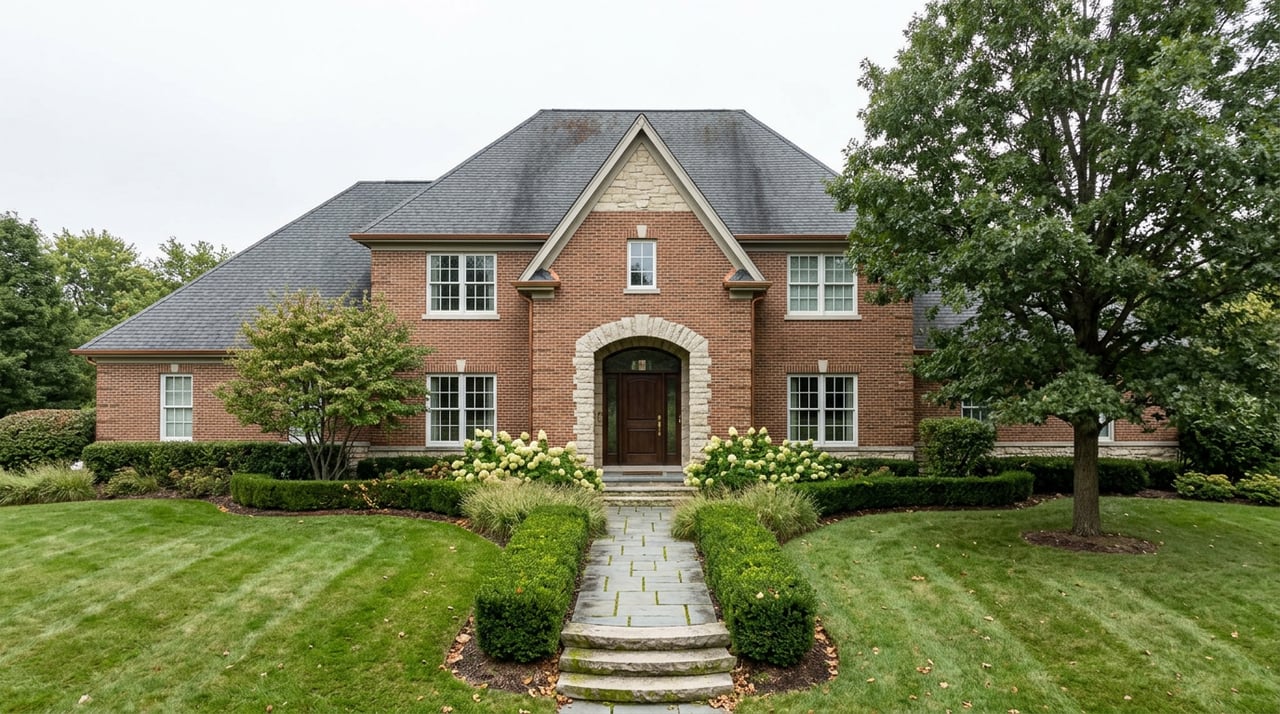
Two four-bedroom homes hit the market in Zionsville within the same month, priced within twenty thousand dollars of each other. Same school district, same builder-grade finishes, same quarter-acre lot. One buyer closes and never thinks about the sewer line under the street again. The other buyer, a year or two later, gets a letter from the Town explaining that a sewer main has finally reached their block and that connecting will run somewhere in the neighborhood of twenty thousand dollars, on top of the price they already paid for the house.
That difference has nothing to do with square footage or curb appeal. It comes down to which side of an old, mostly invisible infrastructure line the house happens to sit on. In Zionsville, whether a home flushes into the municipal sewer system or into a private septic tank is one of the few facts about a property that can silently reshape its long-term cost, and it rarely gets more than a single checked box on a disclosure form.
Why Some Streets Never Got the Pipe
Zionsville's sewer system did not arrive everywhere at once. The Town's own wastewater division still maps the community into rural and urban service districts, a distinction that matters because construction standards, and utility access, differ depending on which side of that line a parcel falls on. Large sections of the town, particularly older platted neighborhoods that predated the current sewer network and pockets closer to the Boone County line, still rely on private septic systems rather than a connection to Town service.
The Town has been chipping away at that gap for years through a sewer extension program that identified several general areas still running on septic and began offering those property owners the option to connect. It is framed as optional, at least for now. State law technically allows a municipality to require connection for any property within 300 feet of a new sewer main, but Zionsville has said its current intent is to let nearby property owners choose whether or not to tie in.
That word, currently, is worth sitting with. Because once you look at what happens the moment you can no longer choose, the math changes fast.
What the Town's Own Numbers Say the Switch Actually Costs
According to figures the Town of Zionsville has published for property owners in the sewer extension areas, connecting an existing septic home to the municipal system involves several separate costs that land squarely on the homeowner, not the Town:
- A private plumbing contractor to install a grinder pump unit and run piping from the house to that pump and from the pump to the main in the street, along with decommissioning the old septic tank. Local contractors quoted the Town a range of roughly $15,000 to $20,000 for this work, comparable to installing a brand-new septic system from scratch.
- A $4,000 sewer availability fee paid to the Town at the time of connection.
- A $25 connection permit fee.
- Ongoing responsibility for owning and maintaining the grinder pump and the line from the house to the main, since the Town only maintains the main itself.
None of that shows up in a home's list price. It shows up later, as a five-figure decision a homeowner has to make once a main reaches their street, or as a cost baked quietly into what a buyer is really taking on when they choose the charming older home over the newer one three streets away.
There is also a rule that removes the option to wait. Once sanitary sewer service becomes available to a property, the Boone County Health Department will not approve construction of a new septic system or a full replacement of a failing one. Minor repairs to an existing system are reviewed case by case, but a septic system that fails after the sewer main arrives generally has one real path forward, and it is the expensive one.
The Setback Rule That Catches Land Buyers Off Guard
For anyone shopping for acreage or a lot to build a custom home in Zionsville's rural district, there is a related detail worth knowing before falling for a piece of land. The Town's design and construction standards prohibit placing a building or a septic system within 75 feet of a Boone County legal drain without written permission from the Boone County Drainage Board. A gorgeous lot with a creek or drainage ditch running through it can look like a private amenity in photos and turn into a real constraint on where a house, and a septic field, can legally sit. It is the kind of detail that only surfaces once a surveyor or a septic designer gets involved, well after a buyer has already fallen for the lot.
A Rate Increase That Already Happened, and a Capacity Debate That Is Still Being Sorted Out
Septic and sewer costs do not exist in a vacuum. They sit inside a larger, ongoing conversation about whether Zionsville's wastewater system can keep up with its own growth, and that conversation got noisy over the past year.
In late 2025, a resident-run group calling itself the Starkey Neighborhood Action Group raised alarms about the aging treatment plant on Starkey Road, arguing the Town should abandon plans for a costly expansion in favor of contracting with the regional TriCo Regional Sewer Utility instead. One widely circulated report put the price tag on the Town's plan at $21.5 million and warned of a roughly 28 percent rate hike to pay for it.
The Town's own response, published in January 2026, told a calmer story. Officials noted the plant, built in 1985 and expanded in 2003 to treat up to two million gallons of wastewater a day, was actually treating an average of about 1.15 million gallons per day, meaning it was running at roughly half its designed capacity under normal conditions. Part of the reason flows had stayed below projections, the Town explained, is that not every part of Zionsville is connected to the municipal system in the first place. Some areas are still on private septic or served by other utilities entirely, which is exactly the split this whole piece is about.
The rate increase itself was real, just smaller than the alarm suggested. The Town's flat sewer rate rose 28 percent to $56.85 per month per residence effective January 1, 2025, the first increase since 2010, aimed at funding equipment upgrades rather than an emergency expansion.
By August 2026, the actual project the Town Council approved was a $12.6 million public-private agreement with Indianapolis-based Bowen Engineering, covering pump replacements at the main lift station, upgrades to the Boone Village Lift Station, new headworks at the treatment plant, a belt filter press replacement, and a new nonpotable water pump station. That is a meaningful, funded commitment to the existing system's reliability, and it is a different number than the $21.5 million figure that made headlines months earlier.
For a buyer, the useful takeaway is not which side of that debate turns out to be right. It is that the Town is continuing to invest in the sewer system's reach and reliability, which makes it reasonable to expect more of the currently-septic areas to get pulled onto the main over time, on a timeline nobody has published yet.
What This Means If You're Comparing Zionsville Streets
If you are weighing a move-up purchase in the Village or an established neighborhood versus a newer subdivision, ask directly whether the home is on municipal sewer or private septic, and if it is septic, ask when it was last inspected and whether the street is anywhere near an active or planned extension area. A septic system that is well maintained and years from any nearby main is a very different situation than one sitting on a block the Town has already flagged.
If you are a relocating family choosing between a newer platted community and something with more character in an older part of town, treat sewer versus septic as part of the real comparison, alongside the finishes and the floor plan. A slightly higher price on a sewer-connected home can be the cheaper option once you account for what a future conversion could cost.
If you are buying land to build, get the parcel checked against Boone County legal drain locations before you get attached to the lot, since that 75-foot setback can quietly shrink your buildable envelope.
A Few Questions Worth Answering Directly
Will my street definitely get sewer service someday? There is no published guarantee or fixed timeline. The Town has extended sewer mains into several previously septic-served areas and continues to invest in the system, and state law would allow it to require connection for properties within 300 feet of a new main, but current policy treats nearby connections as optional.
Can I just keep repairing my septic system instead of connecting? Minor repairs are reviewed case by case. A full septic replacement or new construction is not permitted once municipal sewer service becomes available to the property, according to Boone County Health Department policy.
What does the recent rate increase mean for my monthly bill? Zionsville's flat sewer rate is $56.85 per month per residence, effective January 1, 2025, following a 28 percent increase that was the first since 2010.
Septic and sewer status is not the kind of thing most people think to ask about when they are touring a home for the first time. It should be near the top of the list, right alongside the roof and the mechanicals, because it is one of the few property details in Zionsville that can turn into a real bill years after closing.
If you are comparing homes across Zionsville's older neighborhoods, newer subdivisions, or open land in the rural district, Laura Heigl and the Heigl Real Estate Group can help you ask the right questions about a property before you write an offer, not after.